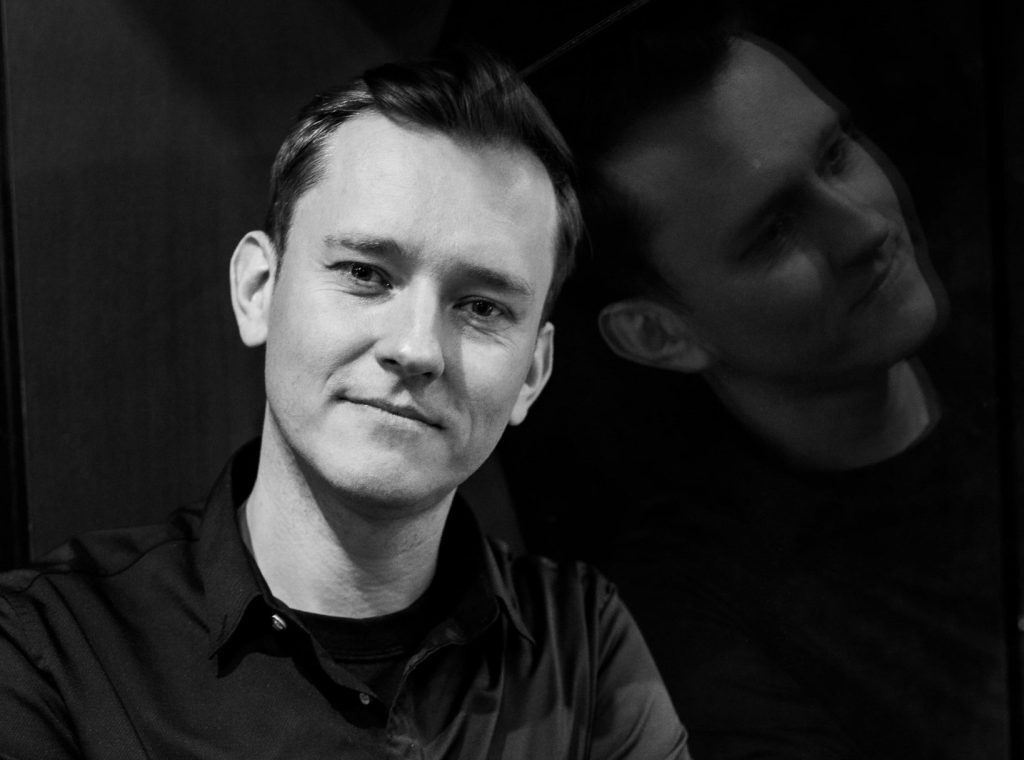
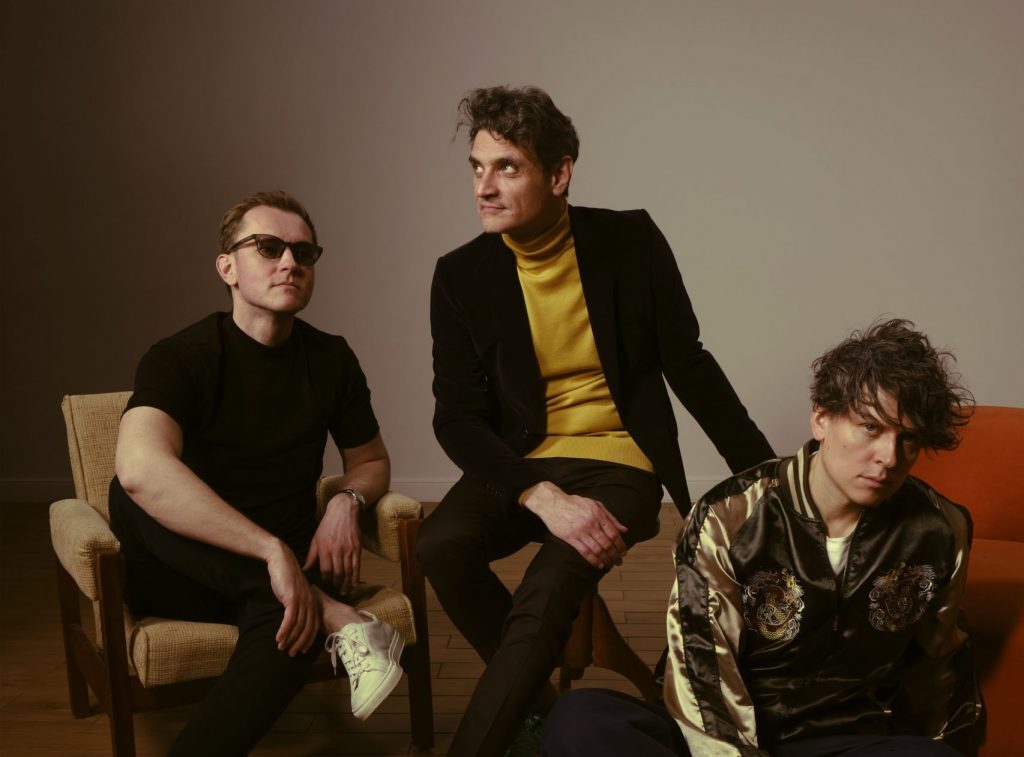
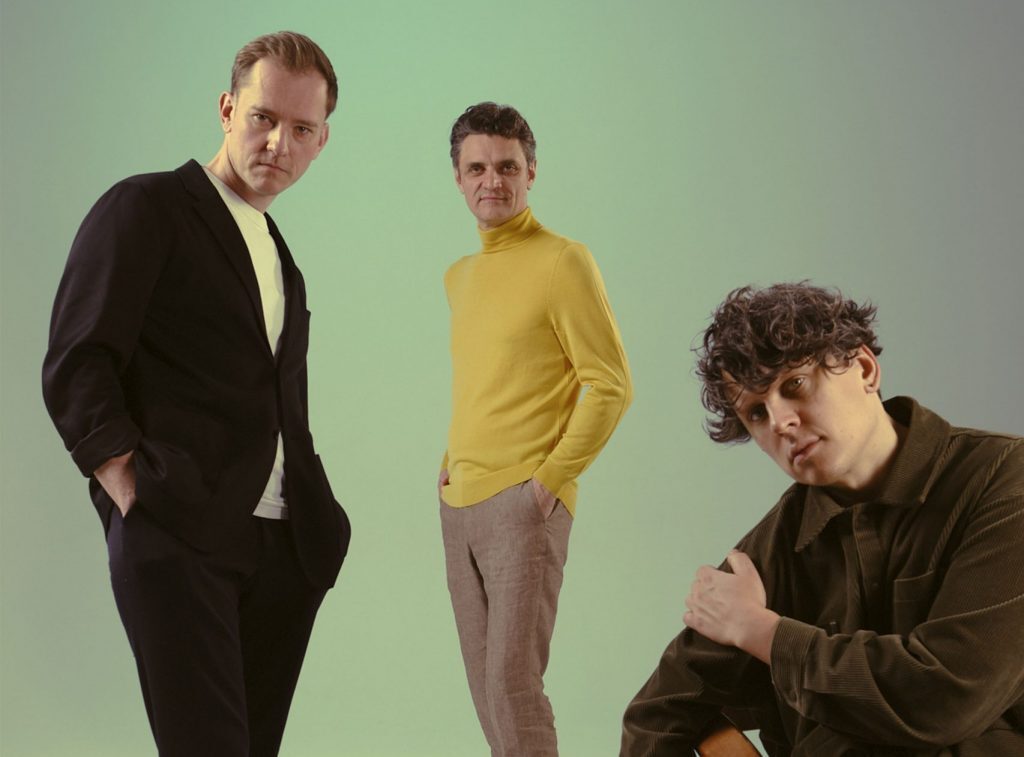
Late last year, Firma Melodiya released the sixth album by Moscow jazz project LRK Trio, created by keyboardist Evgeny Lebedev (EL), bassist Anton Revnyuk, and drummer Ignat Kravtsov in collaboration with the Euphoria Orchestra, an ensemble of young classical musicians led by Elizaveta Korneeva.
Recorded in just two days at the legendary GDRS studio on Malaya Nikitskaya Street in Moscow, LRK Orchestra is an experiment impressive in its scope, uniting the worlds of jazz, classical, and folk music. Today, the Lebedev-Revnyuk-Kravtsov trio is without exaggeration among the flagships of Russian jazz, and their new recording is a major milestone not only in their own artistic journey but for the entire Russian music scene. When we say "jazz" here, we mean contemporary jazz in all its eclecticism and openness, and LRK are precisely the ones pushing this music beyond familiar territories.
In this interview with Ilya Rasskazov (IR), Evgeny Lebedev shares how the collaboration between three jazz improvisers and a symphony orchestra came together, what music made it onto this recording, and his thoughts on creativity and art as a whole.
Recorded in just two days at the legendary GDRS studio on Malaya Nikitskaya Street in Moscow, LRK Orchestra is an experiment impressive in its scope, uniting the worlds of jazz, classical, and folk music. Today, the Lebedev-Revnyuk-Kravtsov trio is without exaggeration among the flagships of Russian jazz, and their new recording is a major milestone not only in their own artistic journey but for the entire Russian music scene. When we say "jazz" here, we mean contemporary jazz in all its eclecticism and openness, and LRK are precisely the ones pushing this music beyond familiar territories.
In this interview with Ilya Rasskazov (IR), Evgeny Lebedev shares how the collaboration between three jazz improvisers and a symphony orchestra came together, what music made it onto this recording, and his thoughts on creativity and art as a whole.
IR: Can LRK Orchestra be called your most ambitious project to date?
EL: I wouldn't even say ambitious—I'd say astonishing. Everything connected with this album can only be described as a miracle. The idea was born a long time ago, and you know how it goes—usually ideas like this are nurtured and often put off "for later." But one morning I woke up with a clear thought that the time had come. And I started writing orchestrations without any expectations. The work went fairly quickly, and in just over a month everything was finished. Then Anton Revnyuk did an orchestration for his new composition "Silhouette of Memories," and we went into the studio to record the trio, imagining in our minds that an orchestra was playing with us. We did it all in two days and simply, as they say, "launched the idea into the universe"—that we needed to find an orchestra. Amazingly, about six months later we were already recording at the famous GDRS studio with the Euphoria Orchestra, led by Elizaveta Korneeva.
How it happened is a long story. Director Anna Paletskaya made a documentary about the circumstances of recording the album, where we reveal in more detail how everything came together. You can watch it on social media or at elebedev.com.
IR: How does it feel that this work was released on Melodiya? Does that fact make the album special? And is a vinyl release expected?
EL: Of course, since childhood I've associated Firma Melodiya with wonder and fairy tales. For us it's an honor and even somewhat nostalgic. Though the realities of the modern music industry have changed dramatically, and now you can release albums and be a successful artist even without a label—especially since labels don't invest much in artists financially. It's rare for a releasing label to fully cover the costs of recording and releasing a CD or vinyl. We're grateful to Melodiya for their interest in our work, it's very significant, and we hope the vinyl will come out there as well.
IR: You belong to a generation that experienced music on vinyl records in childhood. What's your favorite?
EL: Absolutely, we all lived through that wonderful time. I personally grew up on audio fairy tales and musical plays. "The Bremen Town Musicians," for example, I listened to countless times until the record started skipping. That recording is probably number one for me.
IR: How did you select the music for LRK Orchestra? It includes both your well-known signature compositions and new material, right?
EL: I had new pieces that I originally heard specifically in an orchestral setting, such as "Riot of Spring," "Mr. L.M.," and "Lullaby," as well as Anton's orchestration of his composition "Silhouette of Memories." Then we decided to choose our pieces that had already stood the test of time and expand their sound and form with the orchestra. That's how the album came together.
EL: I wouldn't even say ambitious—I'd say astonishing. Everything connected with this album can only be described as a miracle. The idea was born a long time ago, and you know how it goes—usually ideas like this are nurtured and often put off "for later." But one morning I woke up with a clear thought that the time had come. And I started writing orchestrations without any expectations. The work went fairly quickly, and in just over a month everything was finished. Then Anton Revnyuk did an orchestration for his new composition "Silhouette of Memories," and we went into the studio to record the trio, imagining in our minds that an orchestra was playing with us. We did it all in two days and simply, as they say, "launched the idea into the universe"—that we needed to find an orchestra. Amazingly, about six months later we were already recording at the famous GDRS studio with the Euphoria Orchestra, led by Elizaveta Korneeva.
How it happened is a long story. Director Anna Paletskaya made a documentary about the circumstances of recording the album, where we reveal in more detail how everything came together. You can watch it on social media or at elebedev.com.
IR: How does it feel that this work was released on Melodiya? Does that fact make the album special? And is a vinyl release expected?
EL: Of course, since childhood I've associated Firma Melodiya with wonder and fairy tales. For us it's an honor and even somewhat nostalgic. Though the realities of the modern music industry have changed dramatically, and now you can release albums and be a successful artist even without a label—especially since labels don't invest much in artists financially. It's rare for a releasing label to fully cover the costs of recording and releasing a CD or vinyl. We're grateful to Melodiya for their interest in our work, it's very significant, and we hope the vinyl will come out there as well.
IR: You belong to a generation that experienced music on vinyl records in childhood. What's your favorite?
EL: Absolutely, we all lived through that wonderful time. I personally grew up on audio fairy tales and musical plays. "The Bremen Town Musicians," for example, I listened to countless times until the record started skipping. That recording is probably number one for me.
IR: How did you select the music for LRK Orchestra? It includes both your well-known signature compositions and new material, right?
EL: I had new pieces that I originally heard specifically in an orchestral setting, such as "Riot of Spring," "Mr. L.M.," and "Lullaby," as well as Anton's orchestration of his composition "Silhouette of Memories." Then we decided to choose our pieces that had already stood the test of time and expand their sound and form with the orchestra. That's how the album came together.
For jazz musicians, what's written in the score isn't so crucial—for us, a score is an invitation to reflect.
IR: This is far from your first experience collaborating with orchestras, and your recent live album with Opensound Orchestra received excellent reviews from both your fans and critics. How did your collaboration with the Euphoria Orchestra develop?
EL: These albums are completely different. If the album with the Opensound string orchestra is a live experience recorded at a concert in the Cosmos pavilion at VDNKh, the one with Euphoria Orchestra is a studio album, and the orchestra itself is many times larger in size. This is a full-fledged symphony orchestra, which creates certain challenges. As Ignat once said: "It's like getting behind the wheel of a BelAZ dump truck after driving a passenger car." Moreover, our music is often unfamiliar to classical musicians: it's full of complex time signatures and rhythms, with a lot of improvisation. As some conductors have admitted to me, the most unusual thing for classical musicians is when the score says the trio improvises, but there's something written in the notes, and it's unclear when and where to come in. Jazz musicians are used to relying on internal rhythm, musical instincts, and their ear, so for us what's written in the score isn't so crucial—for us, a score is an invitation to reflect, though within the framework of form. That's probably where the main challenge of working with the orchestra lay. But conductor Liza Korneeva quickly figured out what was what, and everything came together during the recording.
EL: These albums are completely different. If the album with the Opensound string orchestra is a live experience recorded at a concert in the Cosmos pavilion at VDNKh, the one with Euphoria Orchestra is a studio album, and the orchestra itself is many times larger in size. This is a full-fledged symphony orchestra, which creates certain challenges. As Ignat once said: "It's like getting behind the wheel of a BelAZ dump truck after driving a passenger car." Moreover, our music is often unfamiliar to classical musicians: it's full of complex time signatures and rhythms, with a lot of improvisation. As some conductors have admitted to me, the most unusual thing for classical musicians is when the score says the trio improvises, but there's something written in the notes, and it's unclear when and where to come in. Jazz musicians are used to relying on internal rhythm, musical instincts, and their ear, so for us what's written in the score isn't so crucial—for us, a score is an invitation to reflect, though within the framework of form. That's probably where the main challenge of working with the orchestra lay. But conductor Liza Korneeva quickly figured out what was what, and everything came together during the recording.
IR: The first composition on the album is a dedication to Lyle Mays. Whose music else inspired you in the process of creating this recording?
EL: Russian classical composers. Without exaggeration, they are everything to us. I'm very inspired by the work of Tchaikovsky, Rachmaninoff, Stravinsky, and Scriabin. It's important to me to continue Russian traditions, to develop Russian melodicism. It's especially valuable when you manage to organically combine jazz rhythms and harmony with Russian character. That's why our brilliant predecessors are the best teachers for me. I probably listen to their music more than any other.
IR: You also recorded a version of Eduard Artemyev's "Poklonniki" from the film "Slave of Love." I'd venture to guess that this track could have become the album's crowning jewel. Why didn't the composition make it onto the record in the end?
EL: The idea to play this piece as a trio came to Anton Revnyuk when we were sitting in the dressing room at the Bolshoi Theatre before going on stage. I just started playing the theme, slightly changing the rhythmic pulse, and the piece sounded different, which allowed us to play it in "our" style. We started including this piece in concerts and grew to love it so much that I decided to make an orchestration. Anton knew Eduard Artemyev personally, called him and asked permission to perform and record the piece. Eduard Nikolaevich said then: "Play whatever you want of mine, please." Of course, we didn't get any written permission at the time, and a few months later Eduard Nikolaevich passed away. When we had already recorded the arrangement with the orchestra, his son objected to including the composition on the album, but shared plans to release an anthology of Artemyev's music—and our version might be included there. Out of enormous respect and love for the music of the great Russian composer, we agreed and gave the rights to this recording to Artemy Eduardovich Artemyev.
IR: Cinematic quality has always been one of the distinctive features of your sound. LRK Orchestra also sounds at times like an ideal film soundtrack. Did you consciously keep any film plots in mind when creating, for example, "Torn Tango" or "Lullaby"?
EL: Our opinions have always aligned on this: music is unthinkable for us without imagery and sensory-emotional depth. Each composition has its own story. For instance, Anton wrote "Silhouette of Memories" under the impression of fragments of a vivid dream that's impossible to remember in full—only a vague outline remains. Ignat Kravtsov's "Luminescence" is also built on a powerful metaphor—the inner glow of a person, of their soul. And with "Lullaby," there's quite a funny story. I composed it many years ago when my eldest son Misha was teething, but my attempt to calm the child had the opposite effect: he cried even harder. I hadn't performed it since then, and now the piece has found a second life, sounding in the orchestra.
EL: Russian classical composers. Without exaggeration, they are everything to us. I'm very inspired by the work of Tchaikovsky, Rachmaninoff, Stravinsky, and Scriabin. It's important to me to continue Russian traditions, to develop Russian melodicism. It's especially valuable when you manage to organically combine jazz rhythms and harmony with Russian character. That's why our brilliant predecessors are the best teachers for me. I probably listen to their music more than any other.
IR: You also recorded a version of Eduard Artemyev's "Poklonniki" from the film "Slave of Love." I'd venture to guess that this track could have become the album's crowning jewel. Why didn't the composition make it onto the record in the end?
EL: The idea to play this piece as a trio came to Anton Revnyuk when we were sitting in the dressing room at the Bolshoi Theatre before going on stage. I just started playing the theme, slightly changing the rhythmic pulse, and the piece sounded different, which allowed us to play it in "our" style. We started including this piece in concerts and grew to love it so much that I decided to make an orchestration. Anton knew Eduard Artemyev personally, called him and asked permission to perform and record the piece. Eduard Nikolaevich said then: "Play whatever you want of mine, please." Of course, we didn't get any written permission at the time, and a few months later Eduard Nikolaevich passed away. When we had already recorded the arrangement with the orchestra, his son objected to including the composition on the album, but shared plans to release an anthology of Artemyev's music—and our version might be included there. Out of enormous respect and love for the music of the great Russian composer, we agreed and gave the rights to this recording to Artemy Eduardovich Artemyev.
IR: Cinematic quality has always been one of the distinctive features of your sound. LRK Orchestra also sounds at times like an ideal film soundtrack. Did you consciously keep any film plots in mind when creating, for example, "Torn Tango" or "Lullaby"?
EL: Our opinions have always aligned on this: music is unthinkable for us without imagery and sensory-emotional depth. Each composition has its own story. For instance, Anton wrote "Silhouette of Memories" under the impression of fragments of a vivid dream that's impossible to remember in full—only a vague outline remains. Ignat Kravtsov's "Luminescence" is also built on a powerful metaphor—the inner glow of a person, of their soul. And with "Lullaby," there's quite a funny story. I composed it many years ago when my eldest son Misha was teething, but my attempt to calm the child had the opposite effect: he cried even harder. I hadn't performed it since then, and now the piece has found a second life, sounding in the orchestra.
IR: Was LRK Orchestra made with an eye toward a new audience, or is it a logical continuation of your story that should still be explored from the very beginning?
EL: Honestly, I don't believe you can do anything in art with cold calculation. Of course, when creating a work, you always hope for something, but that's no guarantee of success. Perhaps the ideal alignment of concept and result is only possible in pop music, and even there it's more of a miracle. I can't speak for everyone, but there was no calculation in this album—only a calling of the soul and a desire to develop, to create. And if our audience expands because of it, we'll only be glad. For now, in the modern world, what works more for expanding an audience is simplification, minimization, and so on. By the way, we're not against that either, which is why we also experiment with pop artists and try different formats and styles.
EL: Honestly, I don't believe you can do anything in art with cold calculation. Of course, when creating a work, you always hope for something, but that's no guarantee of success. Perhaps the ideal alignment of concept and result is only possible in pop music, and even there it's more of a miracle. I can't speak for everyone, but there was no calculation in this album—only a calling of the soul and a desire to develop, to create. And if our audience expands because of it, we'll only be glad. For now, in the modern world, what works more for expanding an audience is simplification, minimization, and so on. By the way, we're not against that either, which is why we also experiment with pop artists and try different formats and styles.
We caught the final note of the album one minute before the session ended.
IR: What turned out to be the most challenging part of working on the new recording, and what was the most enjoyable?
EL: The main challenge was related to the difference between the worlds of classical and jazz musicians. Fortunately, the Euphoria Orchestra has first-class performers who are open to different genres, so all the rough edges were quickly smoothed out. Another challenge was the tight recording schedule, but here too a small miracle happened: we caught the final note of the album one minute before the session ended. But the most amazing feeling is when you hear music being created before your eyes in the studio. The orchestra breathes as a single organism, bringing the musical notation to life. Our trio picks up this energy and carries it forward with care. For me, creating music has always been true magic, and the studio process confirms this every time.
IR: Your work is well known in the West. You've toured extensively and released records abroad. How has the situation changed in recent years?
EL: The geography of our tours within Russia has expanded significantly, but Japan continues to remember us—we've already performed there four times. There have also been solo trips to Hong Kong, but right now our main focus is, of course, on concerts within the country.
EL: The main challenge was related to the difference between the worlds of classical and jazz musicians. Fortunately, the Euphoria Orchestra has first-class performers who are open to different genres, so all the rough edges were quickly smoothed out. Another challenge was the tight recording schedule, but here too a small miracle happened: we caught the final note of the album one minute before the session ended. But the most amazing feeling is when you hear music being created before your eyes in the studio. The orchestra breathes as a single organism, bringing the musical notation to life. Our trio picks up this energy and carries it forward with care. For me, creating music has always been true magic, and the studio process confirms this every time.
IR: Your work is well known in the West. You've toured extensively and released records abroad. How has the situation changed in recent years?
EL: The geography of our tours within Russia has expanded significantly, but Japan continues to remember us—we've already performed there four times. There have also been solo trips to Hong Kong, but right now our main focus is, of course, on concerts within the country.
IR: The Soviet and Russian jazz school has rich traditions of exploring domestic folk music. In your music, including on the new album, folk motifs are also richly represented. Is turning to folk music a global trend today?
EL: For me, it's not a trend—it's love. I grew up on folk music, studied in the folk department at music school, and only later became interested in jazz. But as they say, there's no such thing as a former folk musician. There was a time when I was called a "folk guy" in the jazz community. And I'm very glad about that. Folk music was, is, and will always be my foundation, my roots, so folk intonations just come out from under my fingers on their own.
IR: Is jazz in fashion again now? How do you see the situation with new post-jazz and jazz-adjacent music in Russia today?
EL: The most important thing is that in Russia you can see audiences of all ages at jazz concerts. Many visiting American jazz musicians have repeatedly expressed admiration for this fact. In America and Europe, jazz audiences are predominantly retirees. Moscow has plenty of jazz clubs, jazz is played in philharmonic halls. I can't say whether jazz is in fashion right now or not, but what's certain is that whether it will be in fashion largely depends on jazz artists themselves. In principle, we in the trio don't strive too hard to stay within the bounds of jazz alone, so sometimes we're criticized for this—that we don't play jazz. I'm sure there should be guardians of jazz traditions, those who maintain stylistic purity in their playing, but that's definitely not us.
IR: Returning to the new album, where would you like this music to be heard—in a philharmonic concert hall, from the stage of a jazz club, on a film soundtrack, or, say, in the elevator of a five-star hotel?
EL: Our music has been played in theaters, at concerts abroad performed by Japanese big bands, it's been played in a massage parlor, used in films—once I even heard our piece "Nebylitsa" in a restroom. Our music can be played anywhere, but if it's associated with goodness and creation, we'll only be glad.
EL: For me, it's not a trend—it's love. I grew up on folk music, studied in the folk department at music school, and only later became interested in jazz. But as they say, there's no such thing as a former folk musician. There was a time when I was called a "folk guy" in the jazz community. And I'm very glad about that. Folk music was, is, and will always be my foundation, my roots, so folk intonations just come out from under my fingers on their own.
IR: Is jazz in fashion again now? How do you see the situation with new post-jazz and jazz-adjacent music in Russia today?
EL: The most important thing is that in Russia you can see audiences of all ages at jazz concerts. Many visiting American jazz musicians have repeatedly expressed admiration for this fact. In America and Europe, jazz audiences are predominantly retirees. Moscow has plenty of jazz clubs, jazz is played in philharmonic halls. I can't say whether jazz is in fashion right now or not, but what's certain is that whether it will be in fashion largely depends on jazz artists themselves. In principle, we in the trio don't strive too hard to stay within the bounds of jazz alone, so sometimes we're criticized for this—that we don't play jazz. I'm sure there should be guardians of jazz traditions, those who maintain stylistic purity in their playing, but that's definitely not us.
IR: Returning to the new album, where would you like this music to be heard—in a philharmonic concert hall, from the stage of a jazz club, on a film soundtrack, or, say, in the elevator of a five-star hotel?
EL: Our music has been played in theaters, at concerts abroad performed by Japanese big bands, it's been played in a massage parlor, used in films—once I even heard our piece "Nebylitsa" in a restroom. Our music can be played anywhere, but if it's associated with goodness and creation, we'll only be glad.